How relevant is Virtual Reality in Event Marketing?
- Quan Nguyen

- Oct 18, 2019
- 2 min read
Updated: Oct 20, 2019
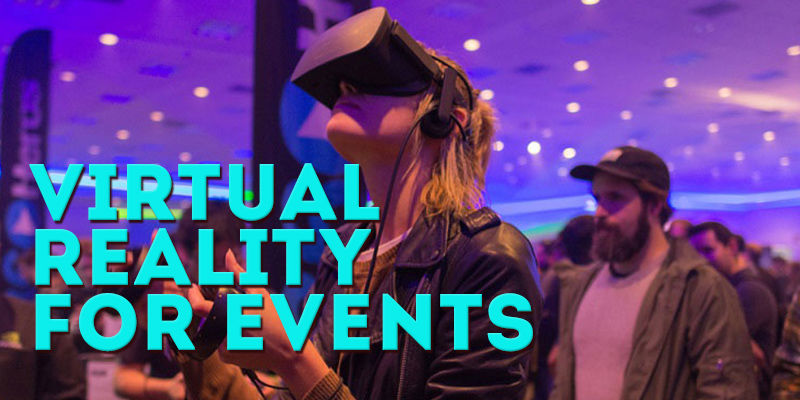
Virtual Reality, or commonly known as VR, is widely available on today markets. Brands are making extraordinary use of it to engage with audiences and tell captivating stories. Experiential marketing is significantly advantageous for modern brands. VR is now a major component of the experiential, marrying it with digital technology to generate values. It is usually recognised with VR headset and complimentary 3D sound.
Pros
The future is exciting! Imagine how VR can be integrated with conferences and exhibition. Speakers can walk the audience through stories that not only can be listened to, but also facilitates multi-sensory recreation (Nguyen 2016). There is a possibility where attendees can stay at home, and absorb almost as much experience as an actual physical one (Newlands 2015). It is a win-win situation for both parties. Attendees can overcome barriers of time and distance, while international events then will enjoy high participation rate. For most event planners and even myself, budget constrain has always been a challenge. An accessible venue, top-notch sound system, sophisticated lighting setup are certainly costly. Further multi-sensory facilities are absolutely not affordable, unless it could be addressed with creativity. VR is a trend for event marketers that should not be missed.

Cons
However, it might destroy the most valuable attribute of an event, the ambience. Think of a fashion show in Pairs, to attend such a show is undeniably unforgettable; for some, it is a privilege. Events that embedded with exclusivity element might face a hard time surviving. This is due to a couple of reasons. First, the increasing popularity of VR is equivalent to greater accessibility demand (Dudkin 2019). People might choose to attend an event at home in their own convenience. Without distractions minimisation, the event outcome would not achieve its desired outcomes. Second, VR is unreal and experiential in nature, so it could ruin potential event attendee's perception towards real experience and importance to physically be in the event venue (Pirest 2017). Event experience is, in fact, measured collectively (Friedman 2019). People come to events to meet new people, share joys, and emotionally driven by cohesion of surroundings. Although leveraging personal experience is necessary, it is deemed insufficient. In the early years, I felt disappointed in going for events, not because they were boring, but I realised that having companies would make the experience better. Based on my past experiences, I placed myself in the shoes of event go-ers, and found success when the experiences encouraged group participation.

To conclude, in my opinion, VR enhances the experiential side to a personal extend. I would love to hear what you think, so comment your opinion on the section below. And don't forget to stay tuned and subscribe to my blog for more posts about event marketing in the future. Cheers!
References:
Dudkin, Ilya. 2019. "The Pros and Cons of Virtual Reality." Skywell Software, March 22, 2019. https://skywell.software/blog/the-pros-and-cons-of-virtual-reality/.
Friedman, Krista. 2019. "Event planning business looks to build more experiences." San Antonio Business Journal, October 4, 2019. https://www.bizjournals.com/sanantonio/news/2019/10/04/q-a-event-planning-business-looks-to-build-more.html.
Newlands, Murray. 2015. "The Future of Events Technology." Inc. This Morning, March 11, 2015. https://www.inc.com/murray-newlands/the-future-of-event-technology.html.
Nguyen, Jennifer. 2016. "The Meaning of VR for the Event Industry." Gevme, March 4, 2016. https://www.gevme.com/blog/virtual-reality-what-does-it-mean-for-the-event-industry/.
Pirest, Joe. 2017. "Pros and Cons of using VR in the Classrooms." Techno Faq, May 23, 2017. https://technofaq.org/posts/2017/05/pros-and-cons-of-using-vr-in-the-classrooms/.


Comments